
The Pauma Valley Community Services District (PVCSD) in California was created in 1961 to provide for the collection, treatment, and disposal of locally generated wastewater. Later, the agency’s mission to protect the public health and environment of its community expanded from providing effective wastewater management to also providing stormwater drainage control, life safety assistance, and security services.
Now, clean solar energy is powering the District’s operations. We spoke with Eric Steinlicht, General Manager, to learn more about the organization and their new solar project.
This loan was made possible by the generous participation of the BQuest Foundation.
Photos of the project are courtesy of Sattler Solar.
Please tell us about the programs and services you provide
The District provides wastewater collection through an eight-and-a-half-mile sewer piping system and wastewater treatment; we own and operate a 175,000 gallons/day capacity wastewater treatment plant that receives about 45,000 gallons/day, and we maintain storm drains as well.
We also provide a number of other services, such as easement maintenance along access paths to utility assets. Our security patrol includes multiple officers patrolling the District boundary, in addition to a front-gate dispatch, all 24/7. Those patrol officers also provide emergency advanced first aid until the proper authorities can arrive on the scene; conduct welfare checks; help with parking and events; respond to various issues and situations; and provide niche services such as venomous snake and pest removal.
All ratepayers in the District benefit from our programs and services.
Tell us about your solar project and how it will impact your organization and community
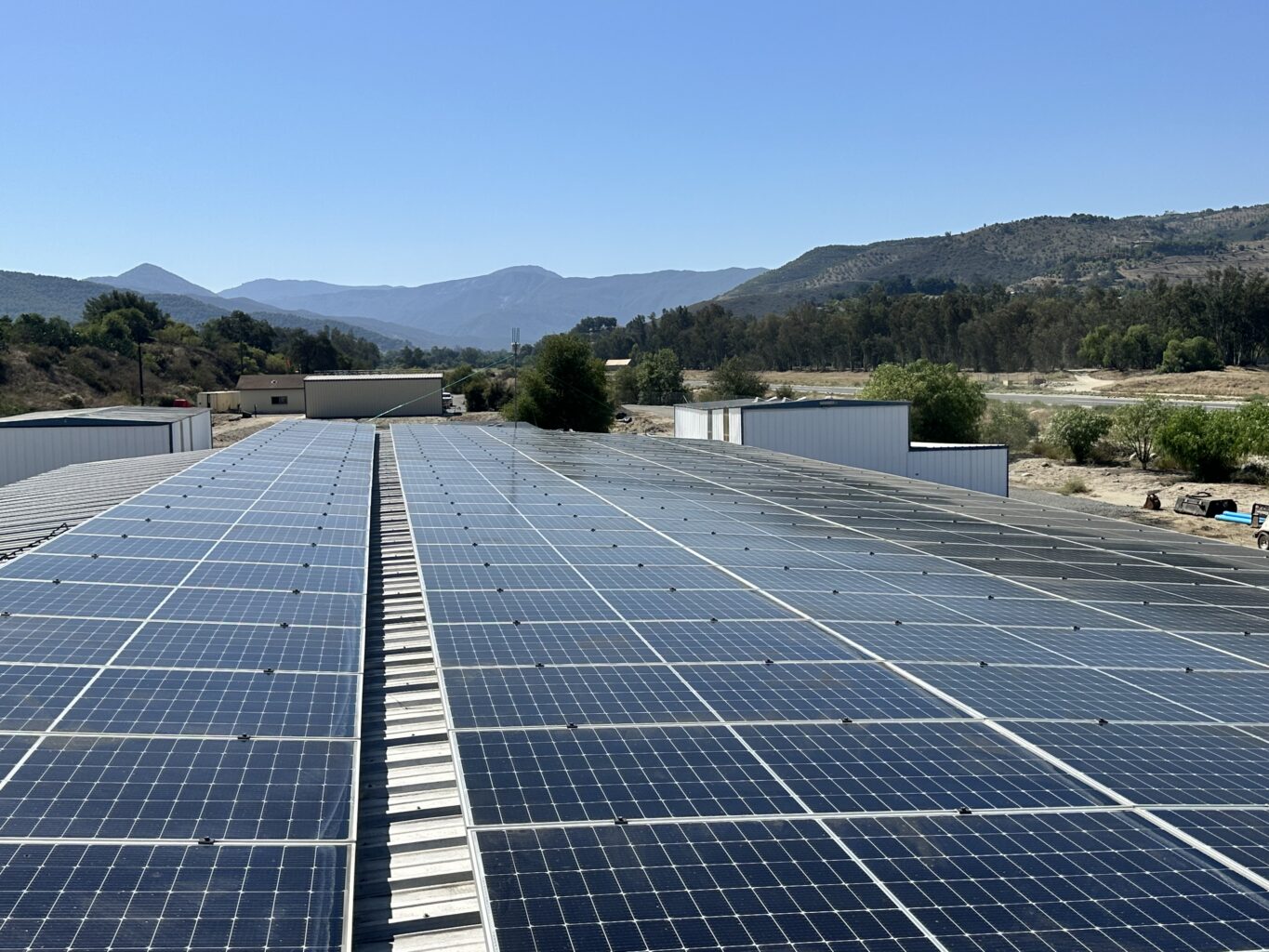
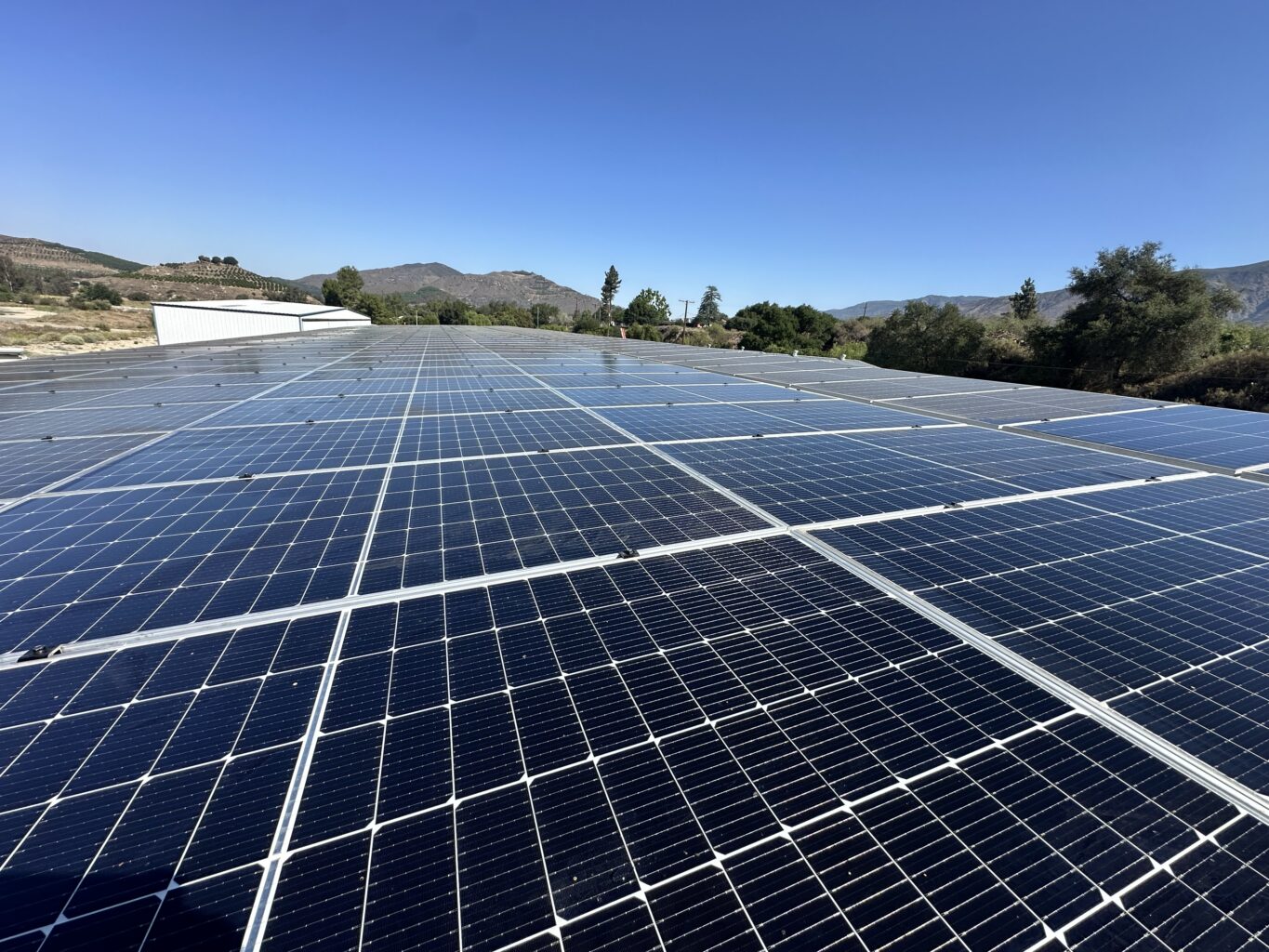
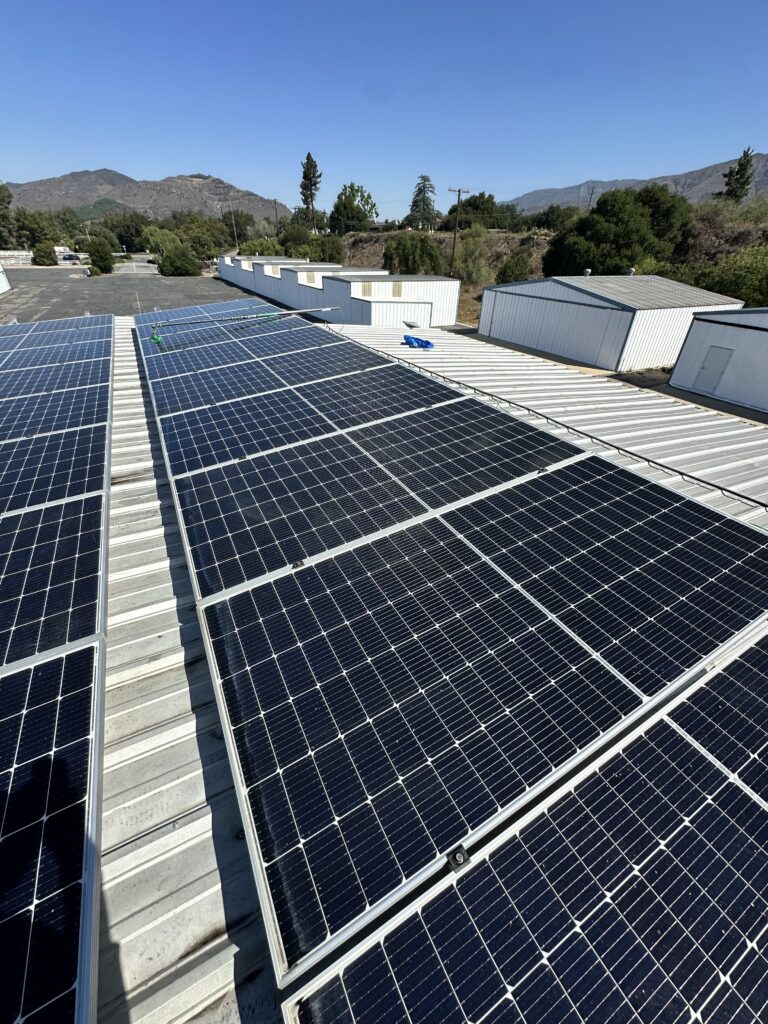
Our 88 kW solar system was primarily designed to offset the significant power demands of our wastewater treatment plant. The plant must aerate the wastewater, which creates a significant power demand for the plant to function properly.
The solar system covers electrical costs to provide an essential service to our ratepayers. Previously, ratepayers shouldered the burden of covering those rising electrical costs for something they need and depend on. With the new system offsetting those costs, our organization is much more resilient. That means rate increases will be much smaller and more stable. Our community will benefit from this rate stabilization, and offsetting electrical costs at the plant will allow us to reinvest in critical infrastructure.
What sparked your organization’s interest in solar energy?
Cost savings were a big factor, as our wastewater treatment plant uses a significant amount of energy. In addition, we strive to help protect the environment and advance California’s statewide policy goals.
The Advanced Clean Fleets regulation from the California Air Resource Board requires vehicle electrification in order to hit carbon-neutral targets. That makes solar, which can help power EV fleets, more attractive to local agencies like ours. We currently have plans for seven electric vehicle chargers and hope to transition to an all-EV fleet.
Local power generation and storage options also provide us increased resilience and better prepare us for power outages.
Our sustainability initiatives enhance public relations and the public’s perception of our agency, and we’re showing that we’re fulfilling our fiduciary responsibility with taxpayers’ funds.
How will you use the savings generated by going solar to further support your mission?
The savings from this project will be reinvested into the wastewater treatment plant as well as other District operations. The savings will also help us build up our reserve funds, allowing the District to establish greater organizational continuity.
What did you learn in the process of going solar that other nonprofits should know?
I learned that it’s critical to know about the different financing options, as well as tax incentives and local programs supporting solar. I also learned that a complex project like ours can take some time to complete.
Our project was challenging because it had an unconventional design and was subject to specific codes and regulations. We learned that it’s extremely important to follow the requirements of the local utility company, which had not initially been clear to us. That’s where CollectiveSun and our installer, Sattler Solar, proved invaluable. Assistance from partners like these is key for agencies like ours who aren’t experts in the process of going solar.
Why did you choose to work with CollectiveSun, and how was the experience?
I first heard about CollectiveSun from San Diego Community Power, our local Community Choice Aggregator. San Diego Community Power purchases energy, and our local utility, San Diego Gas & Electric (SDG&E), then delivers that energy to us over their poles and wires. I contacted Community Power to see if they offered any programs to help complete our solar project when we ran into a snag: we discovered that we would be incurring an unexpected charge from SDG&E for upgrades needed where our solar project would connect to the grid.
At that point, the District was running out of options, and I was seriously considering recommending to our board that we scrap the project. However, CollectiveSun got us back on track with a Solar Loan, and our experience working with them has been superb.
When our project encountered issues, CollectiveSun went out of their way to work through those issues every step of the way. This far exceeded my expectations; I did not expect a lender offering a competitive loan to be so helpful and engaged to see the project through! CollectiveSun’s positive attitude and willingness to help, in partnership with our incredible installer, Sattler Solar, helped us complete the project successfully.
How would someone get in touch with your organization to learn more about your services?
The best place to start is our website, https://paumavalleycsd.ca.gov. There, you can learn more about the Pauma Valley Community Services District.
