|
|
|
|
 |
Solar Spotlight: Pauma Valley Community Services DistrictThe Pauma Valley Community Services District (PVCSD) in California was created in 1961 to provide for the collection, treatment, and disposal of locally generated wastewater. Later, the agency’s mission to protect the public health and environment of its community expanded from providing effective wastewater management to also providing stormwater drainage control, life safety assistance, and security services.
Now, clean solar energy is powering the District’s operations. We spoke with Eric Steinlicht, General Manager, to learn more about the organization and their new solar project.
This loan was made possible by the generous participation of the BQuest Foundation.
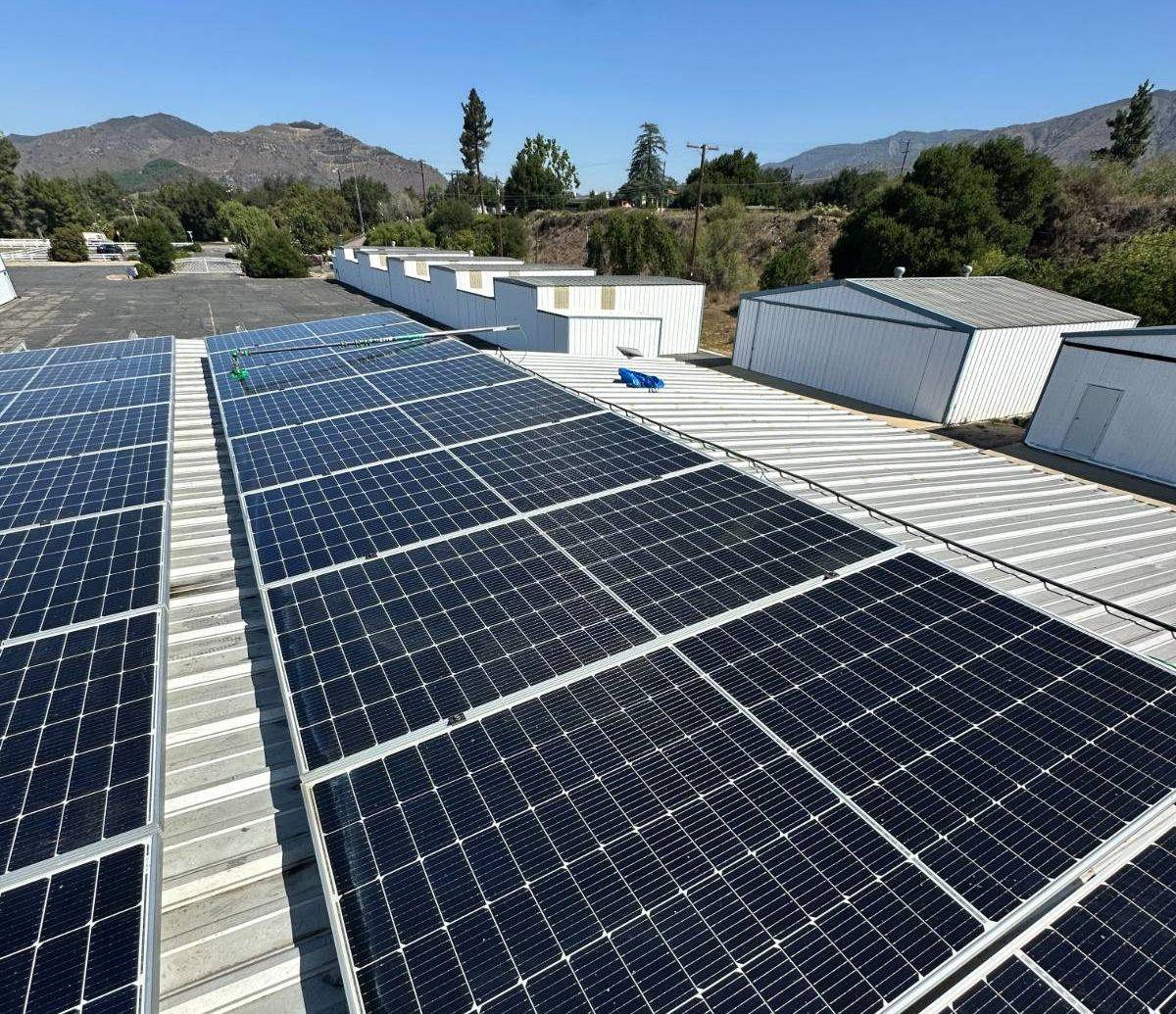
Photos of the project are courtesy of Sattler Solar.
|
 |
Please tell us about the programs and services you provideThe District provides wastewater collection through an eight-and-a-half-mile sewer piping system and wastewater treatment; we own and operate a 175,000 gallons/day capacity wastewater treatment plant that receives about 45,000 gallons/day, and we maintain storm drains as well. We also provide a number of other services, such as easement maintenance along access paths to utility assets. Our security patrol includes multiple officers patrolling the District boundary, in addition to a front-gate dispatch, all 24/7. Those patrol officers also provide emergency advanced first aid until the proper authorities can arrive on the scene; conduct welfare checks; help with parking and events; respond to various issues and situations; and provide niche services such as venomous snake and pest removal.
All ratepayers in the District benefit from our programs and services.
Tell us about your solar project and how it will impact your organization and communityOur 88 kW solar system was primarily designed to offset the significant power demands of our wastewater treatment plant. The plant must aerate the wastewater, which creates a significant power demand for the plant to function properly. The solar system covers electrical costs to provide an essential service to our ratepayers. Previously, ratepayers shouldered the burden of covering those rising electrical costs for something they need and depend on. With the new system offsetting those costs, our organization is much more resilient. That means rate increases will be much smaller and more stable. Our community will benefit from this rate stabilization, and offsetting electrical costs at the plant will allow us to reinvest in critical infrastructure.
|
| Read More Here! |
|
|
|
|
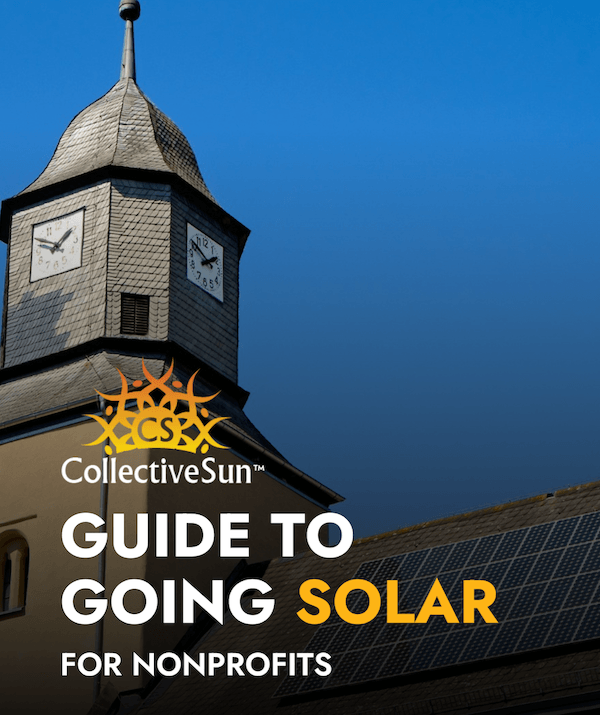 |
If you’re thinking about getting solar for your nonprofit, you’re not alone! Many nonprofit organizations across the nation are going solar, and for good reason. Solar not only lowers your carbon footprint, supporting the environment — it can also lower your nonprofit’s electricity bills, allowing you to focus precious financial resources on your mission.
But the process of going solar may seem daunting.
That’s why we’ve created a comprehensive 62-page solar guide to give you the information you need, every step of the way.
At CollectiveSun, we’ve helped hundreds of nonprofits across the country go solar. We can help you before, during, and after your solar is installed — helping you determine whether solar makes sense for your organization, explaining the available financing options and incentives, and even managing the project for you, if you pick a financing option that includes that service.
Now, the support we provide nonprofits includes our new 62-page guide, with information to support you wherever you are in your solar journey. The guide includes:
Solar basics Financing solar for your nonprofit Preparing your nonprofit for solar What to do after you go solar And more things you need to know As a subscriber to our newsletter, you can download the 62-page guide for free below. Let us know if you have any questions or comments — we’re always here to help.
|
| Download the Guide Here! |
|
|
Disclaimer: The information in our educational materials does not constitute legal or tax advice and should not be relied upon for any purpose. Please consult your legal counsel and tax advisor. |
|
|
|
|
Was this newsletter forwarded to you and you’d like to join our mailing list?
Click here! |
|
|
|
|
|
Know a Nonprofit?
If your favorite nonprofit organization is exploring going solar and their mission is to provide programs & services that support communities of concern benefitting:
|
|
|
CollectiveSun is here to help you with your solar financing.
| Interest Rates Start at 4.99% | | Rates Are Based On Community Impact, Not Just Credit Score | | One Simple Payment | Term Length Up To 10 Years | | Payment Holiday Durning Construction of System | No Prepayment Penality |
Our goal is for you to end up with a solar system that reduces your carbon footprint and is a $0 down investment with a positive cash flow from day one, so it has an immediate impact on your bottom line. That’s what we want most for the organizations that are the backbone of our communities — financial and environmental sustainability that allows you to concentrate on your mission and reach your sustainability goals. |
|
|
If you’d like to learn more, schedule
a 20-minute call with Matt here. |
|
|
Navigating the world of solar financing can be daunting, but it doesn’t have to be. Our team of seasoned experts has been focused on delivering solar financing solutions for nonprofit and tax-exempt organizations across the country for over a decade. In just the last few years, we’ve proudly facilitated solar projects for over 200 nonprofits spanning 25 states. |
|
|
 |
At CollectiveSun, we understand that every nonprofit is unique, and that’s why we offer a diverse range of financing options. Whether you’re considering a loan like our CollectiveSun Solar Loan designed to support your purchase of a solar system while allowing you to benefit directly from the Direct Pay Tax Rebate; exploring third-party ownership options like our CollectiveSun Solar Power Agreement (SPA); or seeking a hybrid funding model like our CollectiveSun Prepaid Solar Power Agreement (Prepaid SPA), we have the perfect solution to match your solar financing needs.
For those looking to dive deeper into how Direct Pay can benefit you, we’re excited to offer a free comprehensive course series on HeatSpring. This series covers not only Direct Pay but also the additional ITC bonus adders, providing you with all the information you need for when your filing is due.
📚 Enroll in the free courses here: CollectiveSun HeatSpring Direct Pay & More Course Series
You’ll discover how these incentives can make solar energy even more accessible and cost-effective for your nonprofit organization. Together, let’s harness the power of the sun to fuel your mission and create a brighter, more sustainable future for all.
Let’s connect and start the conversation!
|
|
|
 |
Solar and Energy Storage Reach New Milestones In Q1 2026, solar energy and energy storage accounted for 91% of all new electricity generation capacity added to the U.S. grid. In May, California was mostly solar-powered — a global first — and Utah produced more power from solar than from any other source. In July, clean energy kept the power grid going through heatwaves across the nation. It’s still to be determined if the U.S. will take full advantage of the abundance of solar and wind, but the current clean energy boom is expected to continue at least till 2030.
Clean Energy Remains Cheaper Than Fossil Fuels Investment bank Lazard has found that clean energy still beats fossil fuels on costs — at a time when U.S. gas-power costs are hitting highs and climbing. While Lazard was looking at large power plants, distributed energy generation, like solar installations for nonprofits, can lower costs and hedge against rising utility bills while improving reliability. That’s why more consumers — commercial as well as residential — are choosing solar over fossil fuels. Using clean energy rather than fossil fuels to meet electricity demand could save the U.S. $5 billion annually.
The Renewables Power Market Is Shifting While federal tax policy is challenging the renewables industry, the rising demand for power means a strong market for power generation that can be deployed quickly, like solar. In addition to meeting clean energy pledges and requirements, this new generation will be needed for data centers, whose electricity use could more than double by 2030. The new head of the Solar Energy Industries Association, Tim Pawlenty, believes the combination of rising demand and the desire for affordability will help support solar energy. |
|
|
|
|
|
|
|
CollectiveSun helps make solar for nonprofits a reality! Our innovative approach helps these organizations secure affordable financing and streamline project implementation. |
CollectiveSun, LLC 888 980 2786 (CSUN) |
|
|
|
|
|
|