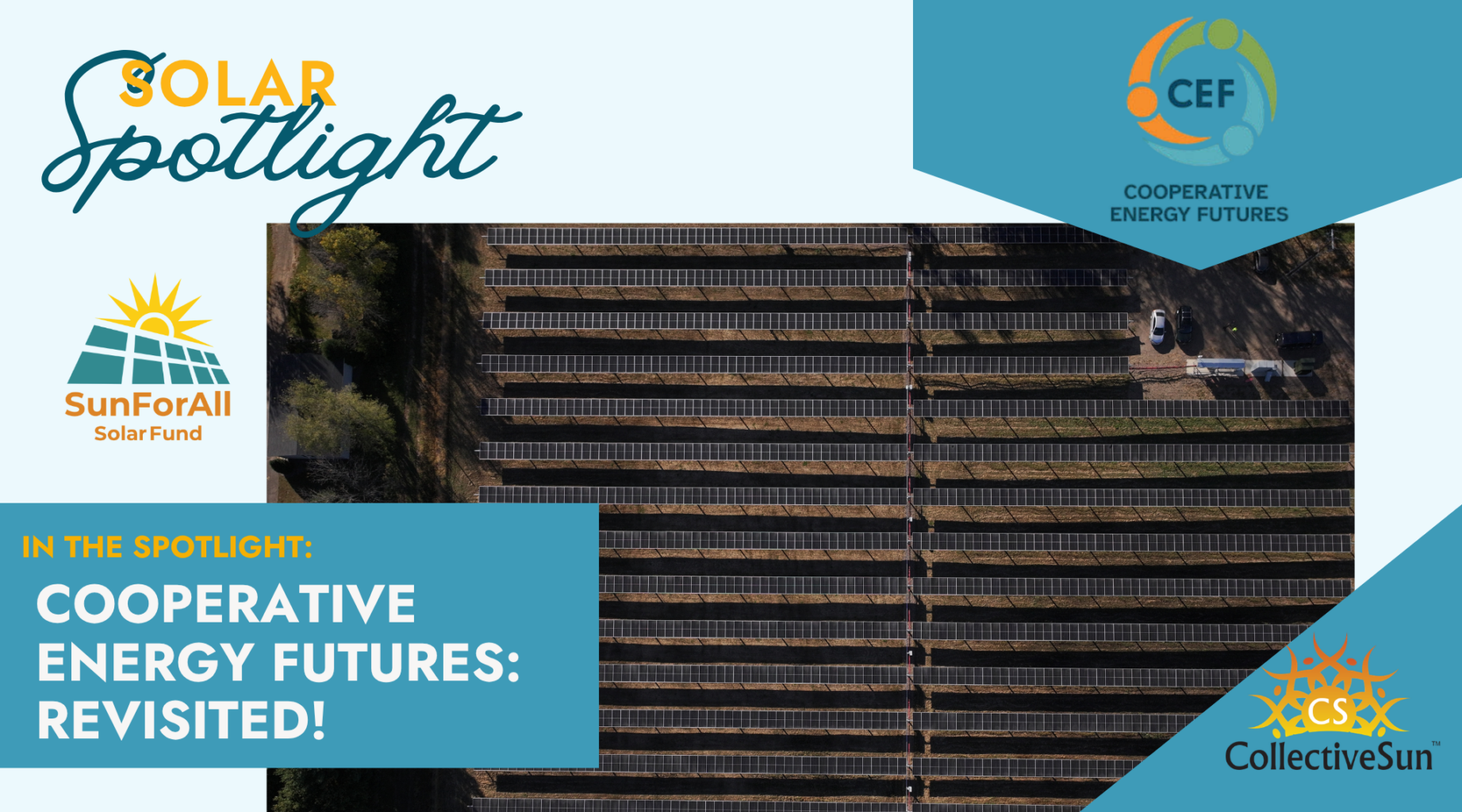
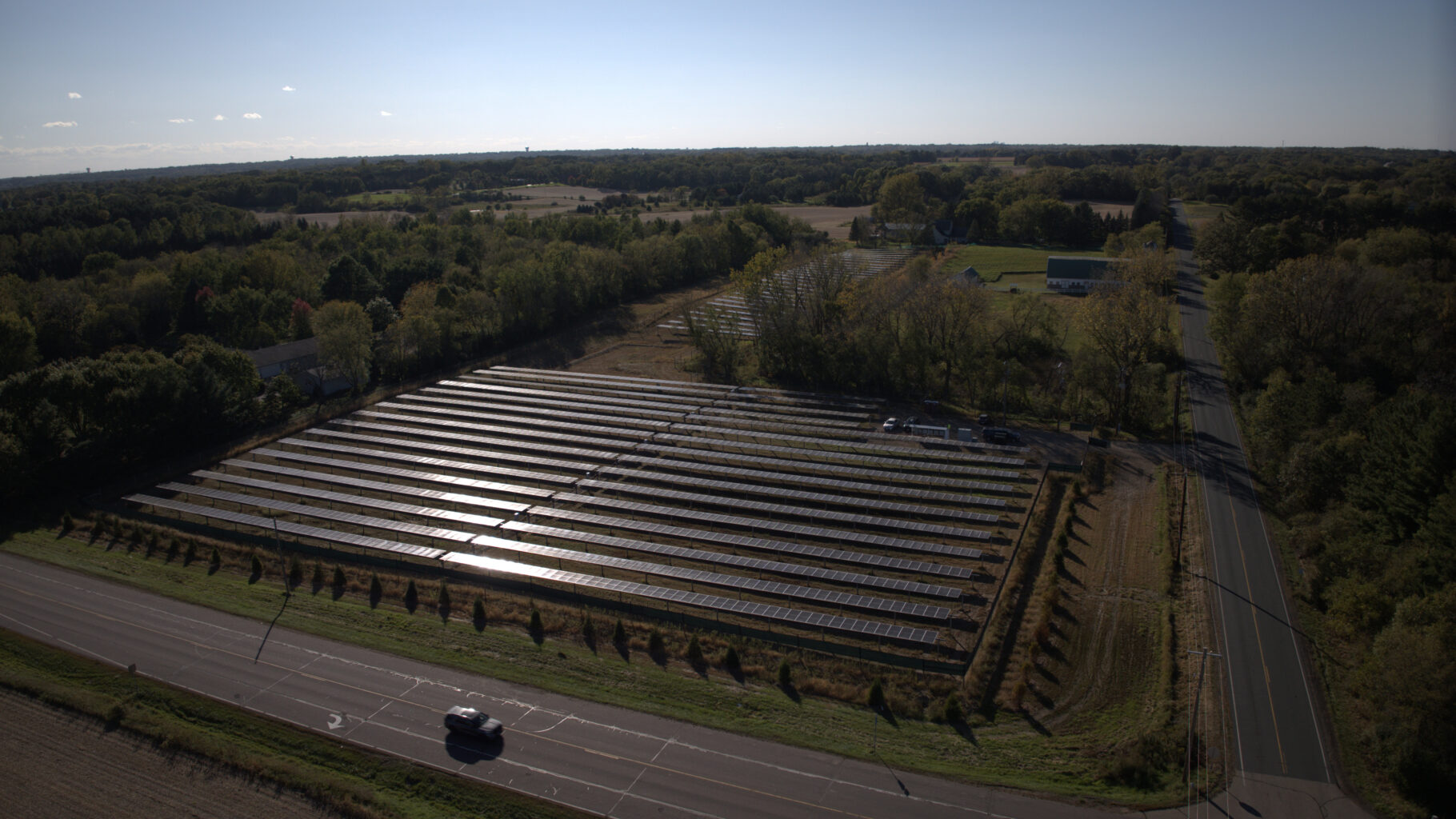
Last December, we introduced you to Cooperative Energy Futures (CEF), a Minneapolis-based, member-owned cooperative that develops and operates community solar gardens across Minnesota. CollectiveSun was proud to partner with CEF on its 11th community solar garden in Lake Elmo, Minnesota, which came online in October 2025. The 1,224 kW ground-mount array covers about seven acres and uses single-axis trackers to follow the sun. It sits on land that was previously leased for monocropped corn, but now has new life with CEF planting native pollinators and bringing in sheep grazing to manage the vegetation. The landowner runs the Sally Manzara Interpretive Nature Center, and the proceeds from leasing the land for solar help fund the center.
Now that the solar garden has completed its first full year, we’re revisiting the project to see how it’s going for the members it serves. We spoke with Allye Doyle, Communications Director at CEF, for an update.
This loan was made possible by the generous participation of the BQuest Foundation.
All images are courtesy of Cooperative Energy Futures.
How is the solar garden serving its community a year in?
Lake Elmo now serves 164 subscribers, and members typically save about 20% on their bills. We don’t have an annual total savings figure available at the moment, but the response from members has been enthusiastic.
How do subscribing households benefit from the garden?
Community solar lets households subscribe to a share of a nearby solar project and receive credits on their utility bill, saving money without installing panels on their own roofs. That opens solar savings to renters, people who can’t afford upfront costs, and others who have been left out of rooftop solar. The Lake Elmo project has 164 community solar subscribers. Our solar gardens usually have between 150 and 200 subscribers, depending on the size of the project and the size of the households involved.
How does a community solar subscription work?
Members pay a one-time $25 fee to subscribe, and the size of a household’s subscription depends on its household electricity usage. We estimate a household’s energy use from its utility billing history and allocate a portion of the solar garden output to match.
As the solar garden produces energy, the member receives a credit on their Xcel Energy bill for their share of the electricity produced. CEF keeps a portion of that credit, but members always come out ahead financially. There’s even a line item on their utility bill showing how much they’ve saved. Typically, that’s about 20% of their bill.
What are members saying about the experience?
Our members are super excited. They want to save money, and they feel great about participating in a local solar project. They love that there’s no catch.
They also want to make the world a better place and bring clean energy to communities where it hasn’t been accessible in the past. A lot of people experience climate depression, and it stresses them out. Participating in a program like this feels good and is something tangible they can do.
Co-ops are also very popular in Minnesota. People here are neighborly, and co-ops like ours give people a positive feeling.
Who can participate?
There aren’t many restrictions on membership. To join, you pay a one-time $25 fee, and you’re a member for life. You have to live in Minnesota, of course, to participate in our community solar projects.
Our community solar offering is targeted at households earning at or below 80% of area median income. For that program, we’re trying to enroll members in specific neighborhoods, and there’s a threshold we want to hit on every project. Many of our gardens are in rural communities. People can sign up from long distances away, but we offer subscriptions to the local community first.
Do you have any advice for other nonprofits considering installing solar?
I’d encourage nonprofits to explore their options and consider how solar can support both their financial goals and their broader mission. It’s worth looking beyond the immediate installation costs to understand the long-term benefits, available incentives, and opportunities to make clean energy more accessible to the community. Partnering with an experienced organization, like CEF, can also help nonprofits navigate the process and identify an approach that works for their needs.
Any other thoughts you’d like to share?
Community solar offers an opportunity to expand access to clean energy beyond the organizations and individuals who can install solar on their own properties. Our Lake Elmo project demonstrates how a single solar installation can serve a broader community, giving subscribers an opportunity to participate in the clean energy transition.
How would someone get in touch with your organization to learn more?
The best place to start is our website, https://cef.coop.