|
|
|
|
You may know CollectiveSun as a solar financing company, with financing tailored specifically to nonprofits. Since 2011, we’ve funded hundreds of solar projects for nonprofit organizations, freeing up their resources to advance their missions.
What you may not know is that CollectiveSun does much more than just fund solar projects.
|
|
|
 |
Our funding solutions help nonprofits navigate the complex world of solar with confidence, delivering robust protections before, during, and after installation to help ensure your project is successful and risk is minimized. That includes contractor vetting, construction management, fund control, and more.
We offer two solar funding models:
Solar Loans: The nonprofit owns the system and selects their installer. We support the nonprofit with risk mitigation tools like contractor vetting, milestone-based payments, and direct pay tax filing services. Solar Power Agreements (SPAs): CollectiveSun owns the solar equipment and the nonprofit owns the energy generated by the system. We manage the project from start to finish, including contractor selection, construction oversight, and performance guarantees. Both options include our signature wraparound services, with risk mitigating best-practice strategies for insurance, warranties, payment and performance bonds, contract and milestone schedules, and many other practices that safeguard nonprofit projects.
Contractor vetting
Solar LoansWhen CollectiveSun provides a loan to a nonprofit, the nonprofit selects the solar installer and we provide basic vetting of the installer.
We require that …
|
| Continue Reading Here |
|
|
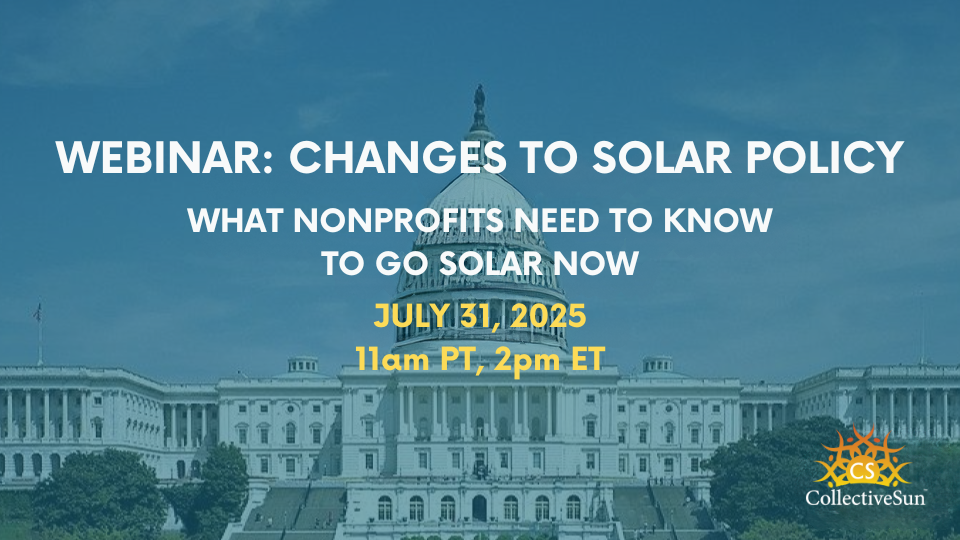 |
The recent passage of the “One Big Beautiful Bill” (OB3) rapidly phases out solar tax benefits and adds new restrictions for nonprofits who want to go solar. An executive order signed shortly after the OB3’s passage could place further restrictions on solar project viability. (Learn more about these developments in the Reading List below.)
Despite the challenges, we’ve charted a path forward that enables nonprofits to achieve their clean energy goals — if they act now. In this webinar, we’ll share a policy update and then provide a roadmap for how your nonprofit can navigate these changes to advance your clean energy project. We’ll cover:
What the OB3 means for nonprofit solar projects. What’s changing. What’s staying the same. How you can still benefit from substantial savings. Developments to watch in the coming weeks. Don’t miss this chance to learn how your nonprofit can save with solar now! Join us on Thursday, July 31, at 11am PT, 2pm ET.
|
| Register Here |
|
|
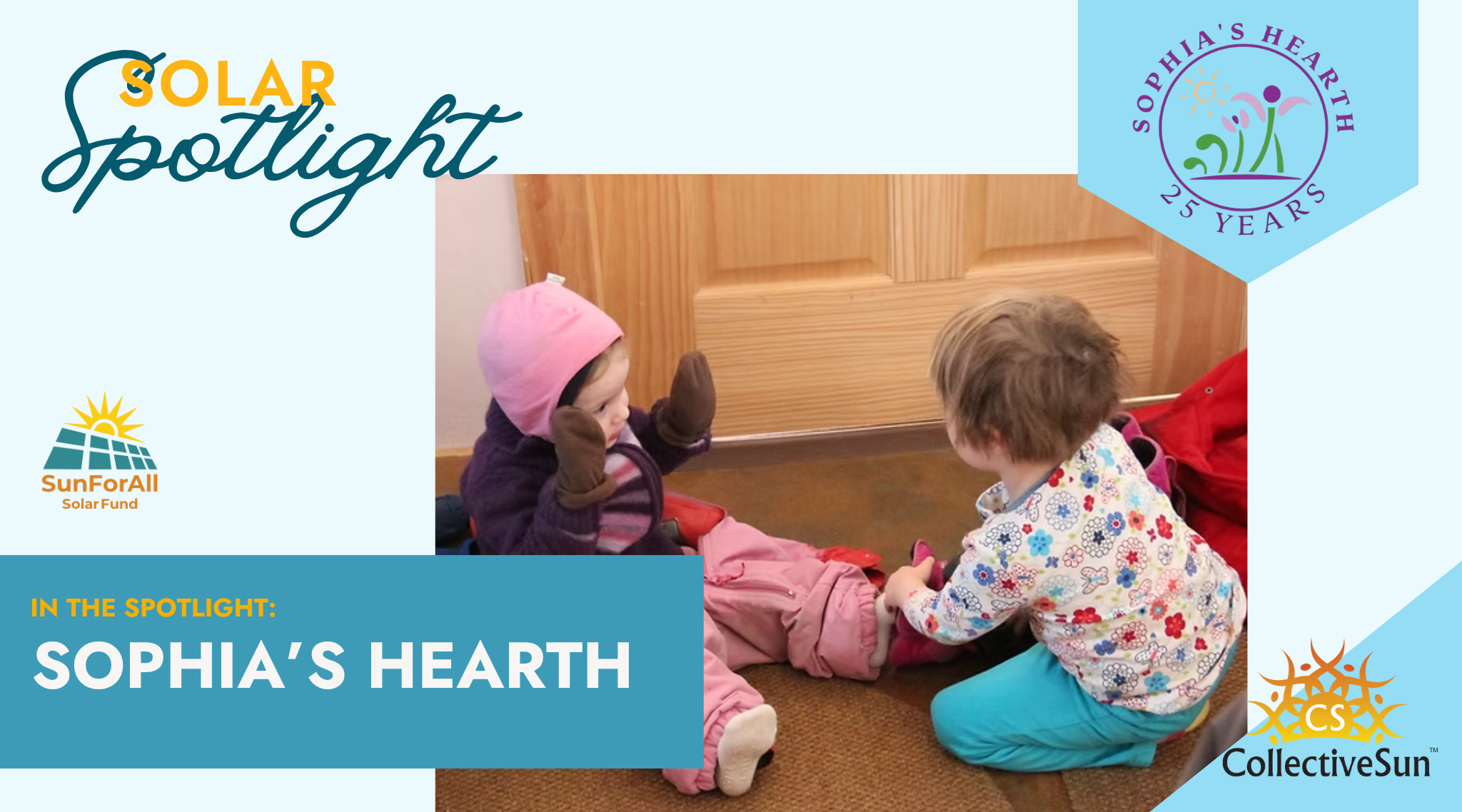 |
When Sophia’s Hearth began in 1999 at Antioch University in Keene, New Hampshire, it grew out of a wish to help parents of young children create a centered, joyful, and warm family life. The organization evolved into a world-recognized leader in early childhood education, now housed in its own dedicated building in Keene.
We had the chance to learn more about Sophia’s Hearth and their new 40.38 kW solar installation from Paula Sousa, the organization’s Director of Early Childhood Care and Education.
This loan was made possible by the generous participation of the BQuest Foundation.
Please tell us about your organization’s work, programs, and services.At Sophia’s Hearth, we support early childhood development through three different programs:
Care and education for children from birth to three years old. There’s a huge need for and shortage of these programs. Given the staff ratios needed for younger children, it’s challenging for programs for these earlier ages to be sustainable financially, so a lot of other early childhood programs focus on preschool and kindergarten. Educational training and mentoring for early childhood teachers. This is available both for those at the beginning of their career who want to be early childhood teachers and those who have been in the career for a while and want more training. Programs for families with young children. Some of these are parent-child classes, in which teachers guide parents through the developmental highlights of their child’s age, and parents also get opportunities to meet other parents. We also put on a family-oriented festival every year for the community.
|
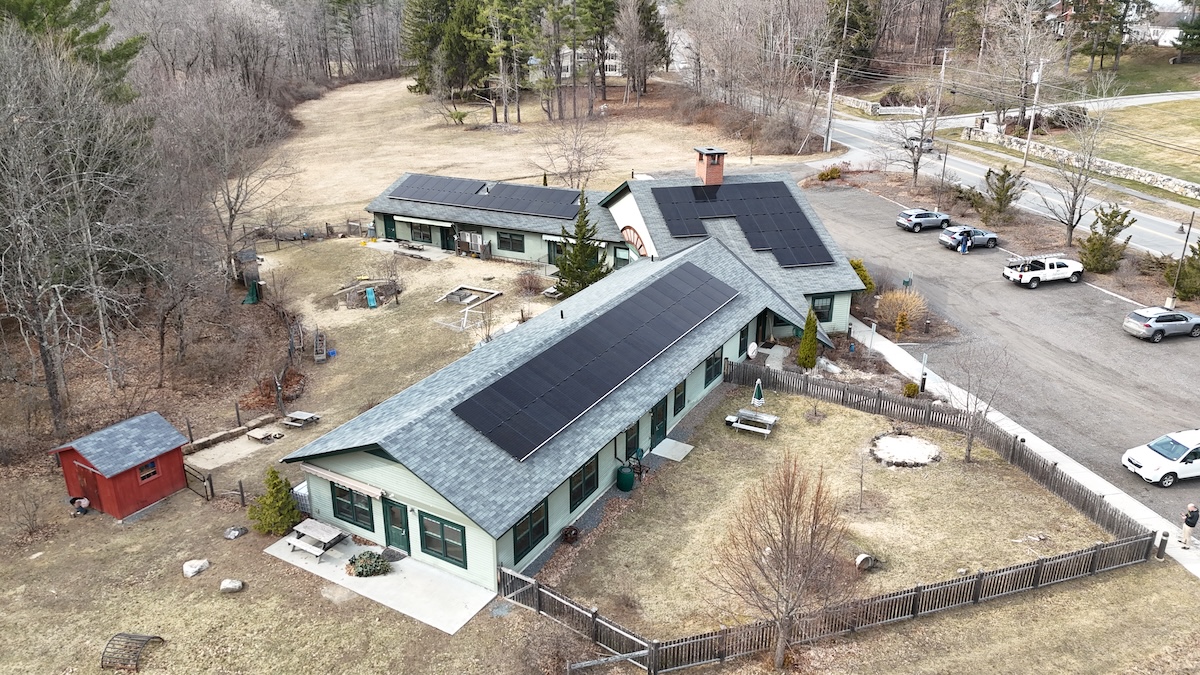 |
How is your solar system helping you save on your electric bills and supporting your mission?Our solar system will help us be financially sustainable. We’re paying about $11,000 a year for electricity, and the savings from our system will help us come closer to breaking even, especially as electricity prices go up.
We received foundation grants that will help us pay off part of our loan earlier than we’d expected. And we’re seeing savings already. The first month our solar was on, even with some rainy days and not having had solar for a full month, our bill was …
|
| Continue Reading Here |
|
|
|
|
 |
|
|
Was this newsletter forwarded to you and you’d like to join our mailing list?
Click here! |
|
|
|
|
|
Know A Nonprofit?
If your favorite nonprofit organization is exploring going solar and their mission is to provide programs & services that support communities of concern benefitting:
|
|
|
CollectiveSun is here to help you with your solar financing.
| Interest Rates Start at 4.99% | | Rates Are Based On Community Impact, Not Just Credit Score | | One Simple Payment | Term Length Up To 10 Years | | Payment Holiday Durning Construction of System | No Prepayment Penality |
Our goal is for you to end up with a solar system that reduces your carbon footprint and is a $0 down investment with a positive cash flow from day one, so it has an immediate impact on your bottom line. That’s what we want most for the organizations that are the backbone of our communities — financial and environmental sustainability that allows you to concentrate on your mission and reach your sustainability goals. |
|
|
If you’d like to learn more, schedule a meeting with Nicole here. |
|
|
Navigating the world of solar financing can be daunting, but it doesn’t have to be. Our team of seasoned experts has been focused on delivering solar financing solutions for nonprofit and tax-exempt organizations across the country for over a decade. In just the last few years, we’ve proudly facilitated solar projects for over 200 nonprofits spanning 25 states. |
|
|
 |
At CollectiveSun, we understand that every nonprofit is unique, and that’s why we offer a diverse range of financing options. Whether you’re considering a loan like our CollectiveSun Solar Loan designed to support your purchase of a solar system while allowing you to benefit directly from the Direct Pay Tax Rebate; exploring third-party ownership options like our CollectiveSun Solar Power Agreement (SPA); or seeking a hybrid funding model like our CollectiveSun Prepaid Solar Power Agreement (Prepaid SPA), we have the perfect solution to match your solar financing needs.
For those looking to dive deeper into how Direct Pay can benefit you, we’re excited to offer a free comprehensive course series on HeatSpring. This series covers not only Direct Pay but also the additional ITC bonus adders, providing you with all the information you need for when your filing is due.
📚 Enroll in the free course here: CollectiveSun HeatSpring Direct Pay & More Course Series
You’ll discover how these incentives can make solar energy even more accessible and cost-effective for your nonprofit organization. Together, let’s harness the power of the sun to fuel your mission and create a brighter, more sustainable future for all.
Let’s connect and start the conversation!
|
|
|
 |
New Challenges for Solar Energy
In a blow to solar, the recently passed “One Big Beautiful Bill” (OB3) includes an accelerated phaseout of the Investment Tax Credit, which has been key to deploying solar. An executive order signed shortly after the OB3’s passage could place further restrictions on solar projects. For nonprofits, this means now is the best time to start a project — to enjoy the most savings and to hedge against the nationwide rise in electricity costs expected from the OB3.
Solar Remains Strong Despite the Challenges
The sun keeps shining on solar. Solar reached 11% of U.S. electric generation capacity this spring and represented 77.7% of new capacity added to the U.S. electric grid so far in 2025 – even becoming the top source of electricity in California. Renewable energy sources generated nearly 1/3 of total U.S. electrical generation in April, with solar providing over 10% of total national output. Despite the challenges, solar can’t be stopped.
Solar and Wind Are Still the Cheapest Energy Sources
Neither tax credits winding down nor low gas prices can stop solar’s cost-effectiveness. Financial firm Lazard has found that solar and wind projects have a lower levelized cost of electricity than nearly all fossil fuel projects — even without subsidies. That’s despite persistent low prices for gas, Lazard says. |
| Need to Unsubscribe? |
|
|
|
|
|
|
|
CollectiveSun helps make solar for nonprofits a reality! Our innovative approach helps these organizations secure affordable financing and streamline project implementation. |
CollectiveSun, LLC
3295 Meade Ave, San Diego, CA 92116
888 980 2786 (CSUN) |
|
|
|
|
|
|