
For over a century, Butte Humane Society in Chico, California, has opened its arms to the lost, the scared, and the forgotten animals of Butte County and beyond.
The organization’s operations are now powered by clean solar energy. We recently had the chance to talk to Emily Acevedo, the organization’s Executive Director, to learn more about Butte Humane Society’s inspiring mission and their new solar project.
This loan was made possible by the generous participation of the BQuest Foundation.
Video and photos of the project are courtesy of Royal Aire.
Please tell us about the programs and services you provide
Since 1911, Butte Humane Society has given animals a second chance at love. I’m really proud that we’re celebrating 115 years as an organization this year. We’re one of the oldest nonprofits in our county and among the oldest nonprofits in the state.
We’re unique in that we’re a private nonprofit limited-admission shelter. All the work we do is to help advance animal welfare. We support other local shelters by taking in transferred animals from them, and we support our community by taking in owner-surrendered animals. Most of the city and county shelters are so over capacity with strays that they don’t have the capacity to help individuals who need to relinquish an animal.
We have the capacity to house about 45 dogs and about 130 cats. In 2025 we took in a total of 816 animals; our goal is to reach 1,000 per year. Our veterinary center served over 20,000 patients last year.
Who benefits from your programs and services?
Our shelter serves dogs and cats. Our veterinary center serves those animals as well as large animals and exotics: birds, turtles, horses, and more.
We touch almost everyone in our community who is a pet owner. We also support people in need in our community through a variety of programs, including our pet food pantry, which creates a safety net for people struggling with food insecurity. Programs designed to support people who need food may not support their pets. Our program, which last year distributed almost 10 tons of pet food and supplies, helps people keep their pets at home and out of the shelter.
One of our largest areas of growth in recent years has been our internship program. I think it’s very important for us to help grow the next generation of animal welfare workers. Each semester we have about 40 college student interns, giving us a unique opportunity to educate these community members on who we are, what we do, and animal welfare. Quite a few of our interns have gone on to veterinary school, at a time when there’s a national shortage of veterinarians.
Tell us about your solar project and the process of going solar
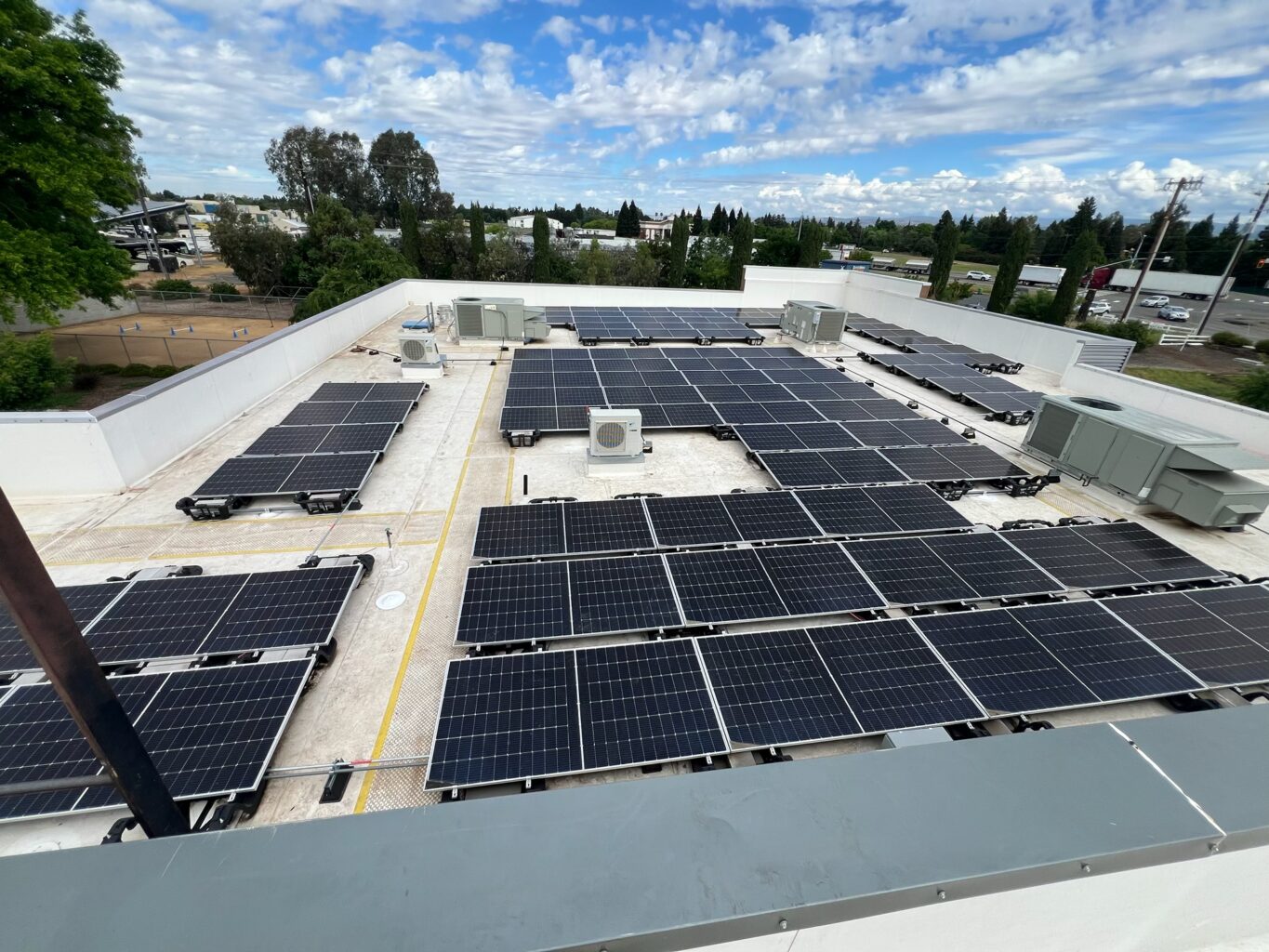
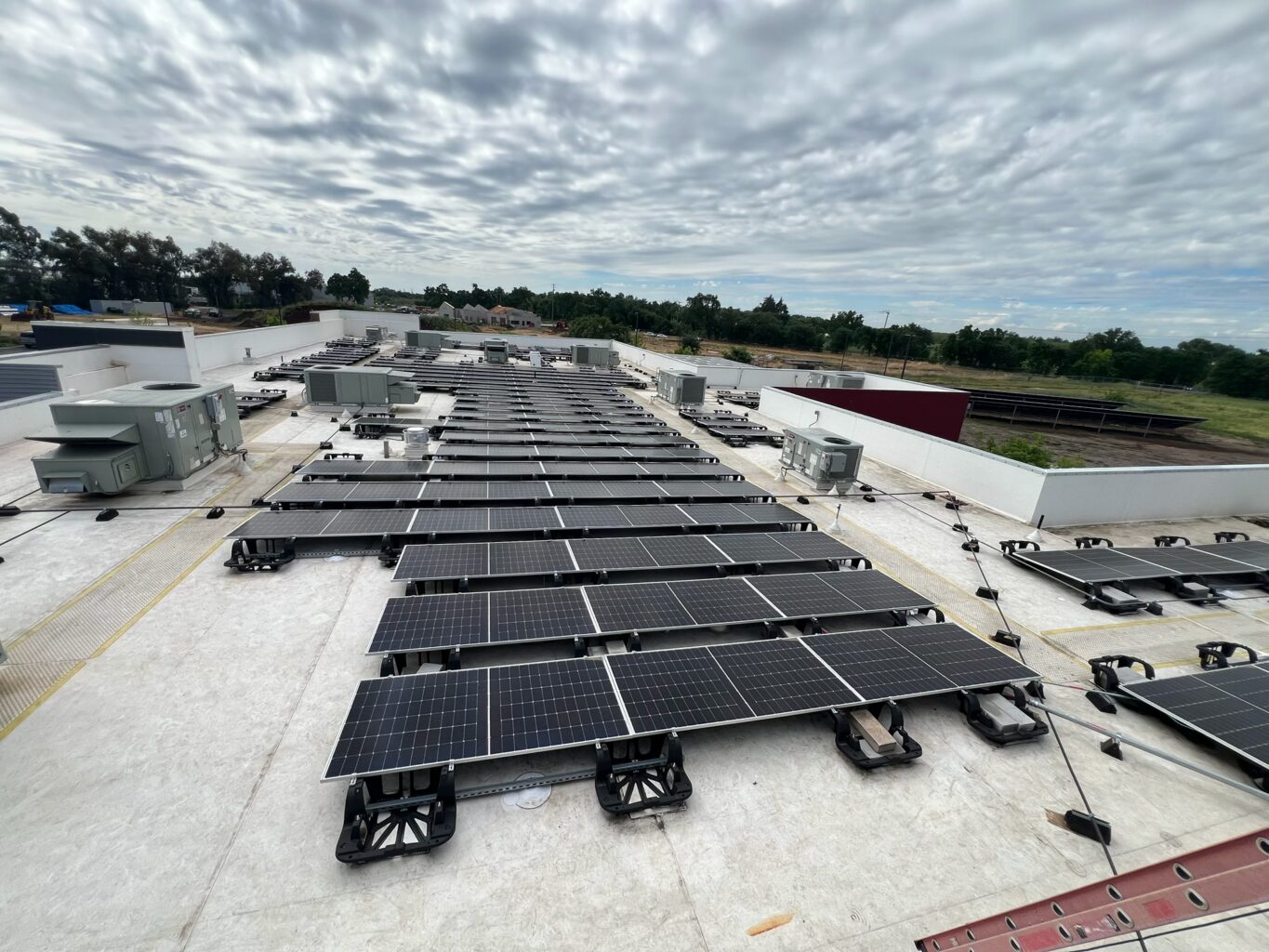
Our initial goal for our 210.92 kW system was to install all the solar panels on our roof. But to get the system size we wanted, in addition to covering our roof with solar, we added a small ground-mounted array behind the building.
We have a couple of industrial electric washers and dryers, which handle about 10,000 pounds of laundry every month — so we use a lot of electricity. With this solar project, we’ll cover all of our electrical needs.
One thing for nonprofits to keep in mind is that this is not like residential solar; the process takes longer. For that reason, it’s all the more important to start your project as soon as possible.
What sparked your organization’s interest in solar energy?
When we finished construction of our new building in 2021, we had solar in mind, but it took a backseat for a while as we had to step up our fundraising efforts during the first years of Covid to complete the building.
I have solar at my house, so I was already familiar with the utility bill savings. As an organization, we do also try to be environmentally conscious, reducing waste and being mindful about what we’re putting into the environment. But the biggest factor in deciding to go solar was the cost savings.
How will you use the savings generated by going solar to further support your mission?
Because we don’t have government contracts, we have the benefit of being creative with our programs. But our challenge is that we don’t have guaranteed streams of revenue; all of our programs are supported by donations from individuals in our community and beyond. We do receive a few grants, but those are becoming more rare.
We estimate that with our new solar system, we’ll be saving about $1,000 a month even after making our loan payment! That $12,000 per year is almost as much as it costs us to feed all of our shelter animals. When the solar loan is paid off, we expect to save $85,000–$90,000 annually. Depending on how much electricity rates increase, we could save even more.
Those solar savings will lower our fundraising burden. It’s become increasingly difficult over the years to cover our expenses, such as staff wages and our electricity bills. The savings will also allow us to build up some reserves and help us expand our programs. We have a large facility and would like to increase our intake capacity — which means saving more animals from euthanasia — instead of putting that money toward electricity bills.
Why did you choose to work with CollectiveSun, and how was the experience?
Our situation was a little different from that of many organizations you work with. We had already started our project. A couple years ago we selected an installer, and because we didn’t have the funds for the project, we approached our bank. They approved us for a solar loan, but then it took six months after the loan was approved to get the project started. At that point, with construction already started on the project, the bank asked us to go through the underwriting process again and told us we’d need to find a donor to guarantee the loan.
So I started scrambling, and I found CollectiveSun in a Google search. CollectiveSun was able to help us even though our project had already started. Although the loan from our bank was fine, the interest rate from CollectiveSun compared to that from our bank is saving us so much money over the life of the loan.
CollectiveSun saved us so much stress, allowing us to get the funding we needed without having to stop our project; we were even able to finish the project on time with the permits that we had in place with our utility. I couldn’t be more thankful that this program showed up in my Google search. And even though we already had our installer, so we didn’t need CollectiveSun’s vetting help, there were still a couple times during the project when CollectiveSun provided advice or served as an intermediary with our installer, which was valuable to us since we aren’t experts in solar.
When I talk to other nonprofit leaders, I tell them that CollectiveSun’s program makes the most sense: you’re not wasting that extra money on interest payments. Plus, nonprofits are held to the same standard as private businesses when getting loans from banks, but we don’t have the same margins, collateral, or reserves. So that makes CollectiveSun’s program all the more helpful for nonprofits.
How would someone get in touch with your organization to learn more about your services?
The best place to start is by visiting our website at https://buttehumane.org or contacting us directly at info@buttehumane.org.
