|
|
|
|
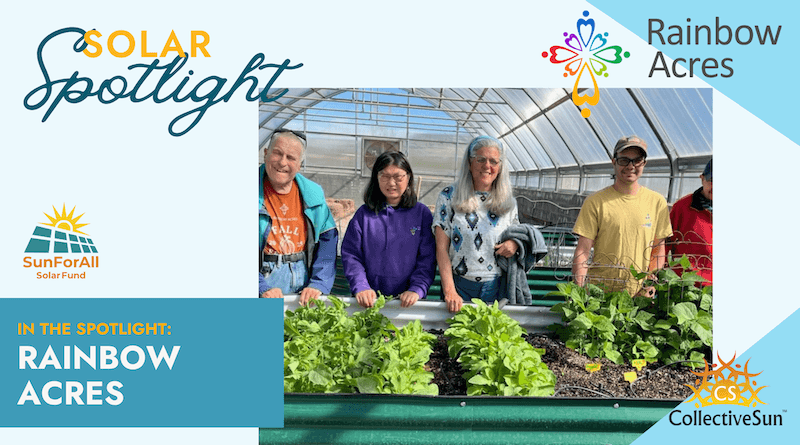 |
In the Spotlight: Rainbow Acres
Founded in 1974, Rainbow Acres in Camp Verde, Arizona, is a caring community that empowers persons with developmental disabilities to live to their fullest potential with dignity and purpose. The organization provides housing, life-enriching programs, and loving, holistic care in a safe, vibrant, inclusive ranch-style community.
Now, Rainbow Acres is powered by solar energy, financed in partnership with CollectiveSun. Paul Higgins, President & CEO, told us about the project and the organization’s programs. It was truly inspiring to hear what this organization is doing for their developmentally disabled community.
This loan was made possible by the generous participation of the BQuest Foundation.
All images are courtesy of Obodo Energy.
|
 |
Please tell us about your mission, including the programs and services you provideRainbow Acres offers a private-pay assisted living community with various programs for developmentally disabled adults. Our 80 residents live, work, and socialize with their peers on the ranch. They are also important members of the local community, where many of them work, volunteer, take classes, and participate in activities.
In the U.S., much of the funding for this population has shifted to home and community-based services with a smaller number of people in a house. But settings like ours work better for some people, who prefer to live in a larger community of folks who are like them.
We help our residents with whatever their goals are. If they want to work in the community, which about a third of our residents do, we coach them in job skills, help them determine what they’re suited for and interested in, try to get them into those jobs, and help them retain the jobs. About a third of the residents have some kind of employment here on the ranch, in many cases to prepare them for outside employment.
We offer a variety of classes throughout the day — some are vocational, some are focused on life skills, and some are more like electives, such as art classes. We also have animal programs, a greenhouse, and an orchard.
Who benefits from your programs and services?We serve a great group of people with intellectual or developmental disabilities; they love being here, and it’s a joy to be able to serve them and provide them a home that is safe, encouraging, and supportive, helping them discern and live out their individual goals. We try to be an active community, not just a holding place.
We have people from their 20s up to the age of 80, including one resident who’s been with us since we started in 1974.
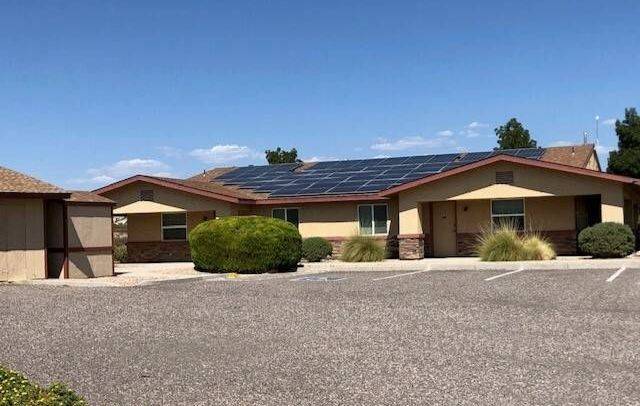
Tell us about your solar projectOn our 50-acre campus we have 12 houses to house our residents, one of which is currently a health and wellness facility; two small apartment buildings for residents who can be a bit more independent; some educational space; a large community center where we gather for activities and lunch; and an administrative building.
We now have solar on both apartment buildings, the administrative building, and a number of the houses. The total, 488.60 kilowatts, is expected to cover about 90% of our electricity needs.
|
| Read More Here! |
|
|
|
 |
|
|
|
 |
If you’re thinking about getting solar for your nonprofit, you’re not alone! Many nonprofit organizations across the nation are going solar, and for good reason. Solar not only lowers your carbon footprint, supporting the environment — it can also lower your nonprofit’s electricity bills, allowing you to focus precious financial resources on your mission.
But the process of going solar may seem daunting.
That’s why we’ve created a comprehensive 62-page solar guide to give you the information you need, every step of the way.
At CollectiveSun, we’ve helped hundreds of nonprofits across the country go solar. We can help you before, during, and after your solar is installed — helping you determine whether solar makes sense for your organization, explaining the available financing options and incentives, and even managing the project for you, if you pick a financing option that includes that service.
Now, the support we provide nonprofits includes our new 62-page guide, with information to support you wherever you are in your solar journey. The guide includes:
Solar basics Financing solar for your nonprofit Preparing your nonprofit for solar What to do after you go solar And more things you need to know As a subscriber to our newsletter, you can download the 62-page guide for free below. Let us know if you have any questions or comments — we’re always here to help.
|
| Download the Guide Here! |
|
|
Disclaimer: The information in our educational materials does not constitute legal or tax advice and should not be relied upon for any purpose. Please consult your legal counsel and tax advisor. |
|
|
|
|
Was this newsletter forwarded to you and you’d like to join our mailing list?
Click here! |
|
|
|
|
|
Know a Nonprofit?
If your favorite nonprofit organization is exploring going solar and their mission is to provide programs & services that support communities of concern benefitting:
|
|
|
CollectiveSun is here to help you with your solar financing.
| Interest Rates Start at 4.99% | | Rates Are Based On Community Impact, Not Just Credit Score | | One Simple Payment | Term Length Up To 10 Years | | Payment Holiday Durning Construction of System | No Prepayment Penality |
Our goal is for you to end up with a solar system that reduces your carbon footprint and is a $0 down investment with a positive cash flow from day one, so it has an immediate impact on your bottom line. That’s what we want most for the organizations that are the backbone of our communities — financial and environmental sustainability that allows you to concentrate on your mission and reach your sustainability goals. |
|
|
If you’d like to learn more, schedule
a 20-minute call with Matt here. |
|
|
Navigating the world of solar financing can be daunting, but it doesn’t have to be. Our team of seasoned experts has been focused on delivering solar financing solutions for nonprofit and tax-exempt organizations across the country for over a decade. In just the last few years, we’ve proudly facilitated solar projects for over 200 nonprofits spanning 25 states. |
|
|
 |
At CollectiveSun, we understand that every nonprofit is unique, and that’s why we offer a diverse range of financing options. Whether you’re considering a loan like our CollectiveSun Solar Loan designed to support your purchase of a solar system while allowing you to benefit directly from the Direct Pay Tax Rebate; exploring third-party ownership options like our CollectiveSun Solar Power Agreement (SPA); or seeking a hybrid funding model like our CollectiveSun Prepaid Solar Power Agreement (Prepaid SPA), we have the perfect solution to match your solar financing needs.
For those looking to dive deeper into how Direct Pay can benefit you, we’re excited to offer a free comprehensive course series on HeatSpring. This series covers not only Direct Pay but also the additional ITC bonus adders, providing you with all the information you need for when your filing is due.
📚 Enroll in the free courses here: CollectiveSun HeatSpring Direct Pay & More Course Series
You’ll discover how these incentives can make solar energy even more accessible and cost-effective for your nonprofit organization. Together, let’s harness the power of the sun to fuel your mission and create a brighter, more sustainable future for all.
Let’s connect and start the conversation!
|
|
|
 |
Halfway Through 2026, It’s Already a Big Year for Solar This year is going strong for renewables, with solar and wind out-generating gas globally in April, U.S. solar generation beating coal in May, and many states breaking clean energy records this spring. This momentum is continuing despite political headwinds, with U.S. utility-scale solar capacity up 20% from last summer. Solar and wind now provide enough energy to serve the needs of nearly 80 million U.S. households.
But Electric Bills Remain High National average electricity prices rose 10% since last year, with D.C. and Hawaii seeing increases over 20%. Americans are blaming the spikes on data centers, which are big energy users; although multiple factors affect electricity prices, data centers are on track to account for 33% of commercial building electricity use by 2050.
Solar + Storage Can Help Lower Bills While Meeting Increased Energy Demand The good news: solar and storage can help lower electricity prices. On a large scale, solar + storage plants can be cheaper to deploy than gas plants and can keep the power on, strengthening our grid. In fact, our nation’s grid reliability has improved since last summer thanks to new solar and batteries. For commercial-scale solar projects like nonprofit solar installations, adding batteries can reduce bills by 10% to 20% — and sometimes much more. |
|
|
|
|
|
|
|
CollectiveSun helps make solar for nonprofits a reality! Our innovative approach helps these organizations secure affordable financing and streamline project implementation. |
CollectiveSun, LLC 888 980 2786 (CSUN) |
|
|
|
|
|
|